8 Things to Consider Before Getting Invisalign

Thinking about getting a straighter smile with Invisalign? You’re not alone! More and more people are choosing clear aligners as an alternative to traditional braces. At ClearBraces Orthodontics, we’ve helped countless patients achieve beautifully aligned teeth with Invisalign. If you’re wondering about Invisalign cost in Sydney or how effective the treatment is, we’re here to guide you through the key things you need to know before making a decision.

1.It Works for More Cases Than You Might Think

Many assume that only minor misalignments can be treated with Invisalign, but that’s not true. These clear aligners can correct a wide range of dental concerns, including overcrowding, gaps, overbites, underbites, and crossbites. While complex cases may still require traditional braces, the best way to know if you’re a good candidate is to consult with an Invisalign orthodontist at our clinic in Sydney.

2.Treatment Time Varies for Each Person

There’s no one-size-fits-all timeline for Invisalign. While some people complete their treatment in as little as six months, others may need 12 to 24 months, depending on the severity of their case. Simple corrections tend to take less time, while more complex realignments require patience. A consultation with our team will give you a clearer idea of how long your treatment might take.

3.They Are Nearly Invisible—But Not Completely

One of the biggest reasons people choose Invisalign is the discreet appearance. While they are far less noticeable than metal braces, they are not 100% invisible. In close conversations, someone might spot them, but they are still a fantastic option for anyone wanting a more subtle orthodontic treatment.

4.A Custom-Fit Experience

Invisalign aligners are personalised for your precise orthodontic treatment. A 3D scan of your teeth ensures your aligners fit perfectly, moving your teeth gradually into the right position. Unlike traditional braces, where adjustments are done in-office, you’ll switch to a new set of aligners every couple of weeks at home. This makes the process convenient and easy to manage.

The image shows a clear orthodontic aligner or retainer held up to display its transparent, custom‑fitted design. This type of appliance is used in modern orthodontic treatments like Invisalign® to gradually guide teeth into proper alignment or to help maintain results after active treatment ends. The clear, smooth tray emphasises discretion and comfort, offering a nearly invisible alternative to metal braces. This visual communicates advanced dental technology, patient‑centric care, and the practicality of removable aligners for everyday life, encouraging confidence and ease throughout the smile‑straightening journey.

5.A Custom-Fit Experience

Invisalign aligners are personalised for your precise orthodontic treatment. A 3D scan of your teeth ensures your aligners fit perfectly, moving your teeth gradually into the right position. Unlike traditional braces, where adjustments are done in-office, you’ll switch to a new set of aligners every couple of weeks at home. This makes the process convenient and easy to manage.

6.You Need to Keep Your Aligners Clean

Your aligners need just as much care as your teeth. Since you’ll be wearing them for about 22 hours a day, they can collect bacteria if not cleaned properly. Instead of using toothpaste, which can be abrasive, opt for Invisalign cleaning solutions or a simple mix of water and white vinegar to keep them fresh and clear.

7.Less Discomfort Compared to Traditional Braces

While Invisalign is more comfortable than metal braces, you will still feel some pressure as your teeth shift. The discomfort is usually mild and temporary. If needed, over-the-counter pain relief like Panadol can help. The key is to stay consistent with wearing your aligners so your teeth can move as planned.

8.You’ll Need to Adjust Your Eating Habits

While Invisalign is more comfortable than metal braces, you will still feel some pressure as your teeth shift. The discomfort is usually mild and temporary. If needed, over-the-counter pain relief like Panadol can help. The key is to stay consistent with wearing your aligners so your teeth can move as planned.

If you’re considering Invisalign and wondering about the Invisalign cost in Sydney, ClearBraces Orthodontics is here to help. Our experienced Invisalign orthodontist will assess your teeth and provide expert guidance on your treatment options. Ready to take the next step toward a confident smile? Get in touch with us today!

Need more help?
We are by your side.
Please send us a message.
Our friendly staff are ready to assist you.

What others are looking at

The image shows a visual representation related to the cost of orthodontic braces. It may include a person, dental imagery, or symbolic financial elements connected to orthodontic treatment. The photograph focuses on illustrating the concept of treatment cost or payment considerations. The composition highlights elements associated with dental treatment and financial planning related to orthodontic procedures.

Ceramic Braces

Are ceramic braces invisible? Are they right for me?

The image shows individuals sitting together with coffee while discussing or reviewing documents, possibly related to orthodontic treatment planning or financial arrangements. The photograph focuses on people interacting in a casual environment with beverages placed on a table. The visual highlights discussion, planning, or consultation activity while seated in a relaxed setting.

Braces Cost

What's the cost? How you treatment affects the cost.

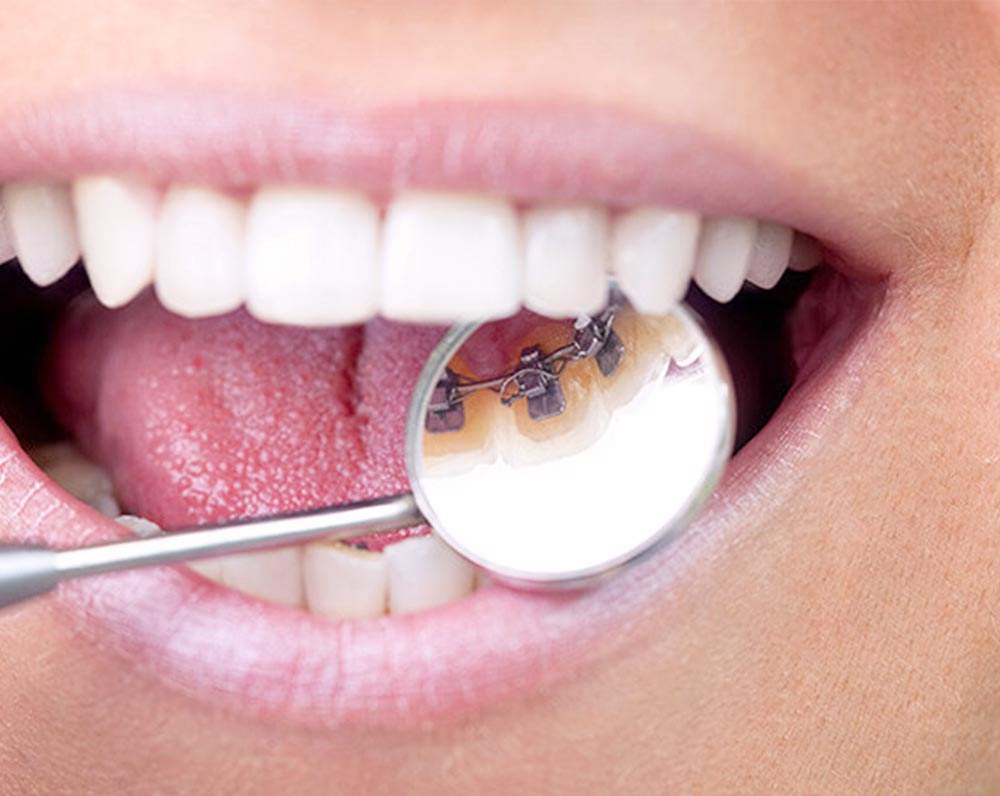
The image shows lingual braces attached to the inner surfaces of the lower teeth. The braces are positioned behind the teeth facing the tongue rather than the front surfaces. The photograph focuses on the placement of brackets and wires along the inner side of the lower dental arch. The visual clearly shows the structure and positioning of lingual braces inside the mouth.

Lingual Braces

So what if you could hide your braces behind the teeth?

Keep Calm, Smile On.

The image shows a person’s teeth fitted with clear aligners. The aligners appear as transparent trays placed over the upper or lower teeth. The photograph highlights how the aligners fit closely to the dental structure. The focus is on the appliance covering the teeth while maintaining a natural appearance. The image clearly displays how clear aligners look when worn inside the mouth.
The image shows another detailed view of teeth wearing clear braces. The orthodontic brackets appear tooth-coloured and connected with a thin wire. The focus is on showing how the braces fit along the teeth and align across the dental arch. The visual highlights the discreet appearance of the orthodontic appliance when placed on the front of teeth.
The image shows teeth fitted with clear braces that use transparent or tooth-coloured brackets. The braces are attached to the front surfaces of the teeth and connected by a thin wire. The visual highlights how the brackets blend with the natural tooth colour. The image focuses closely on the dental structure to clearly show the orthodontic appliance and its positioning.
The image shows teeth wearing clear aligners fitted closely over the dental surfaces. The transparent trays follow the shape of the teeth and appear smooth and nearly invisible. The photograph focuses on the aligners positioned inside the mouth. The image clearly displays how removable aligner trays look when placed on teeth during orthodontic treatment.
The image shows teeth fitted with clear braces positioned across the dental arch. The brackets appear transparent or tooth-coloured and are connected by an orthodontic wire. The visual highlights how the appliance sits on the tooth surfaces. The image focuses on the braces and their alignment across the teeth during orthodontic treatment.
The image shows the interior or exterior of a dental or orthodontic practice environment. It likely includes clinical furniture, treatment chairs, or reception space. The setting appears clean and organised, showing equipment or areas used for patient care. The image focuses on the overall practice layout and professional clinical atmosphere. The visual gives a general view of a dental treatment setting.
The image shows a close-up dental photograph or orthodontic visual focusing on teeth alignment or orthodontic treatment progress. The visual highlights the dental structure, tooth positioning, and possible orthodontic appliances. The photograph emphasises dental details and arrangement of teeth while showing the orthodontic condition or treatment stage.
The image shows a graphic or photograph representing clear braces attached to teeth. The braces appear tooth-coloured or transparent and are positioned on the front surfaces of the teeth. The visual focuses on how clear braces blend with natural tooth colour. The composition highlights the placement and appearance of orthodontic brackets designed to be less noticeable.

Free City Parking Available | Interest Free Payment Plans