
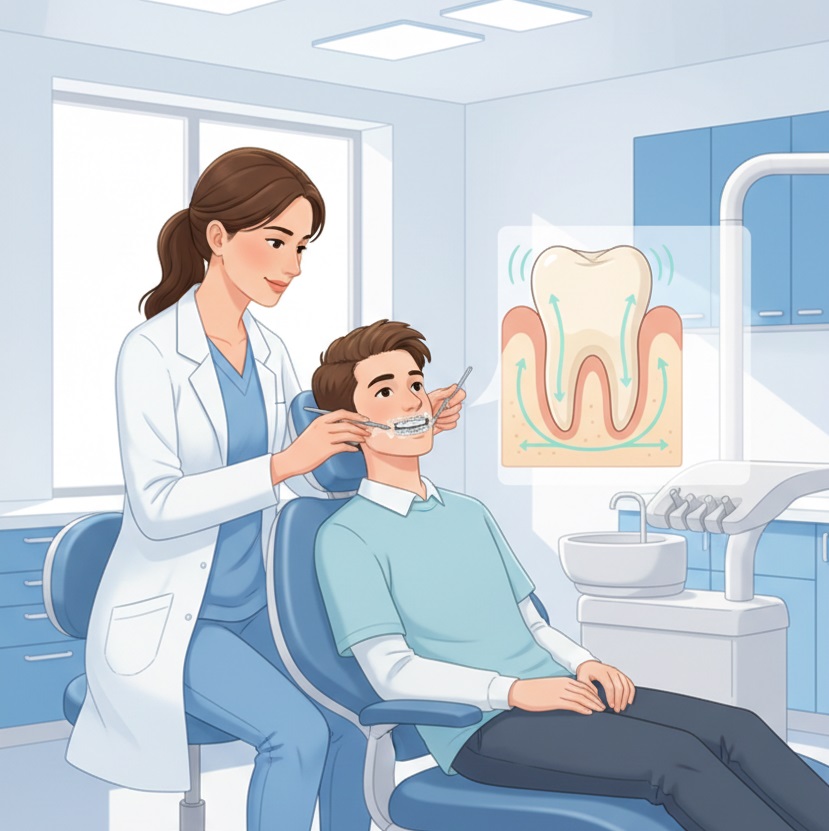
The Silent Forces Behind Tooth Movement
A surprising number of adults sit in the chair and say the same thing.
“I had braces years ago. Everything was fine. Then things changed.”
There is usually no trauma, no major event. Just a slow shift. A slight overlap. A retainer that feels different. Cleaning takes a little more effort.
What they are noticing is not failure. It is biology at work.
Teeth exist inside a living system. They are supported by alveolar bone and connected through a periodontal ligament that allows controlled adaptation. That ligament is the reason orthodontic treatment works. It permits movement when a gentle, sustained force is applied.
But that same design also means teeth respond to forces that are present long before any aligner or bracket is introduced.
Table of Contents
A Closer Look at the Biology
Every time force is applied to a tooth, cells within the surrounding bone respond. On the pressure side, bone resorbs. On the tension side, new bone forms. This is a regulated process. It does not happen abruptly. It happens gradually, in response to consistency.
Muscles generate that consistency.
The tongue exerts light outward pressure. The cheeks apply inward resistance. The lips influence anterior tooth position. During swallowing, which occurs hundreds of times each day, coordinated muscle activity places a subtle load across the arches. When clenching or grinding is present, occlusal forces increase significantly.
Over months and years, these patterns influence equilibrium. Teeth naturally settle where surrounding forces balance.
That balance is rarely visible in the mirror. Yet it determines long-term alignment.
Why Alignment Can Change in Adulthood
Jawbone remains metabolically active throughout life. Even after growth has completed, remodelling continues in response to function. When muscle behaviour stays consistent, but retention is discontinued too early, teeth may adapt slowly towards previous patterns.
This is not a dramatic relapse. It is an incremental adjustment.
In adults considering teeth straightening, recognising this biological reality changes expectations. Treatment is not simply repositioning enamel. It is recalibrating the equilibrium between tooth, bone, and muscle.
An experienced orthodontist evaluates:
- Occlusal contact distribution
• Wear facets indicating parafunction
• Resting tongue posture
• Facial muscle tension
• Arch symmetry
These details guide planning far more than photographs alone.
The Role of Muscle Memory in Stability
Muscle memory refers to learned neuromuscular habits that operate automatically. If the tongue habitually rests low, it continues doing so. If stress triggers clenching, the jaw repeats that response without instruction.
When alignment is corrected without acknowledging those forces, stability depends heavily on retention devices alone. When muscle influence is considered during planning, tooth position can be designed to coexist more comfortably with natural function.
That distinction matters.
For individuals exploring orthodontic treatment Sydney, the difference between short-term straightening and long-term balance often lies in this assessment phase.
Beyond Straightness
Patients often focus on appearance first. That is understandable. A straighter smile improves confidence and makes hygiene easier.
But well-positioned teeth also distribute bite pressure evenly. Balanced occlusion reduces concentrated load on individual teeth. Proper alignment allows gum tissue to adapt more uniformly around each root.
Where aesthetic refinement is desired after functional correction, treatments such as porcelain veneers may be integrated thoughtfully. Structural harmony must come first. Cosmetic enhancement works best when the foundation is stable.
A Warmer Perspective
Many adults delay seeking advice because they assume the shift is minor or inevitable.
It is understandable to feel frustrated after previous treatment. It is equally understandable to hesitate before committing again.
A structured consultation does not obligate you to proceed. It provides clarity. Sometimes reassurance is enough. Sometimes, limited correction prevents more significant movement later.
The key is understanding what is happening rather than guessing.
If you have noticed small changes, if floss catches where it did not before, or if your bite feels slightly different, those observations are valid. Your awareness matters.
Taking the Next Step Thoughtfully
If you are considering teeth straightening in Sydney, the first step is assessment rather than appliance selection. Evaluation of muscle influence, bite balance, and arch stability determines whether monitoring, aligner therapy, or another approach is appropriate.
This process is guided by clinical evidence, not trend or speed.
If you would like clarity about your own alignment, booking a professional review allows you to understand options based on your specific structure and function.
No pressure. Just informed decision-making built on proper evaluation.
FAQs
Ans. Yes. Repeated light muscular forces influence alignment gradually over time.
Ans. Bone continues to remodel, and muscle patterns remain active throughout adulthood.
Ans. Subtle changes are common and often manageable with early assessment.
Ans. Increased bite forces can affect how teeth contact and distribute load.
Ans. Retention supports bone stabilisation and improves predictability.
Ans. When bite stability is achieved, aesthetic refinement such as porcelain veneers may be considered.
Dr. Manish Shah
BDS, MBBS, MMED (Sleep Medicine)
- Masters in Sleep Medicine
- General Medical Practitioner
- General, Implant and Cosmetic Dentist
- Certified in TMJ & Craniofacial Pain Management